Importing Fish into the UK — Expert Support for a Smooth Process
Need to navigate complex import regulations? Aerona Customs Clearance makes importing fish into the UK fast, compliant, and stress-free.
Importing fish into the UK requires careful planning, from health certificates to border inspections. Whether you're bringing in live fish, shellfish, molluscs, or crustaceans, Aerona helps ensure full compliance with UK import laws.
Why Aerona For Importing Fish into the UK?
Years of experience in fish and seafood customs regulations
Direct liaison with FHI and APHA on your behalf
Support for health certificates, notifications, and border compliance
One-stop service from port arrival to destination clearance
CLICK BELOW TO WATCH FIRST!
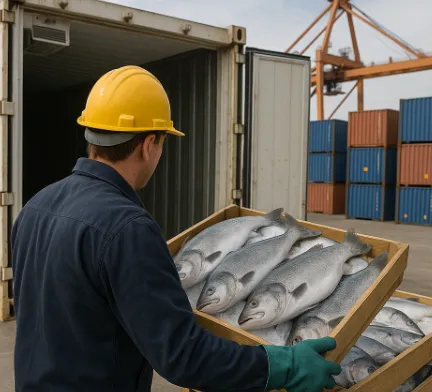
What You Need to Import Fish and Shellfish
• Authorisation from the Fish Health Inspectorate (FHI)
• Valid health certificates from country of origin
• Notification to FHI at least 24 hours before arrival
• Checks by the Animal and Plant Health Agency (APHA) at Border Inspection Posts (BIP)
Additional Rules for Specific Categories
• Ornamental coldwater fish require biosecurity plans
• Endangered species need a CITES permit
• Non-native species follow strict controls
Importing Fish for Human Consumption
Fish and shellfish for human consumption are subject to public health rules. Bivalve molluscs must come from approved production zones. Proper identification marking is essential to meet hygiene standards.
Common Documentation Challenges
Errors in documentation can result in Regulation 16 or Regulation 23 notices. Aerona helps correct errors quickly and manages isolation protocols if needed. We keep your goods moving.
Contact Us for Help Importing Fish into the UK
Complete the form below for tailored support or call us today to speak with our import experts.
Simplify Your Fish Imports with Aerona
Importing fish into the UK can be complicated. Let Aerona’s experienced team handle the paperwork, so your products clear quickly and compliantly.
Importing Fish into the UK - Frequently Asked Questions
1. Do I need a licence to import live fish into the UK?
Yes. You must be authorised by the Fish Health Inspectorate (FHI). You also need a valid Animal Health Certificate, IPAFFS pre-notification, and entry through an approved Border Control Post (BCP).
2. Can I import fish without FHI approval?
No. Importing live fish without FHI authorisation can result in seizure, destruction of goods, unlimited fines, and possible prosecution.
3. How do I get Fish Health Inspectorate (FHI) approval?
Most importers must register as an Aquaculture Production Business (APB). An inspection usually takes place within 7 working days of application.
4. What documents do I need to import live fish into the UK?
You typically need:
FHI authorisation
Animal Health Certificate (EHC)
IPAFFS notification (with UNN number)
Commercial invoice
Transport document (AWB / Bill of Lading / CMR)
Catch certificate (if wild-caught)
CITES permit (if endangered species)
Missing paperwork can cause rejection or isolation for up to 3 weeks.
5. What is IPAFFS and when must I notify it?
IPAFFS is the UK’s import notification system.
You must pre-notify:
1 working day before EU imports
48 hours before air freight
72 hours before sea freight
Failure to notify may result in goods being treated as illegal imports.
6. What happens if my fish import paperwork is wrong?
Your shipment may be:
Delayed or detained
Isolated for disease testing
Issued with a Regulation 23 or Regulation 16 notice
Rejected or destroyed
You may also face fines of up to £3,500 per customs error.
7. What is a Regulation 23 notice?
A Regulation 23 notice is issued when documentation errors are found for species susceptible to controlled diseases. The shipment is “paused” while corrections are made.
8. What is a Regulation 16 notice?
A Regulation 16 notice relates mainly to documentation errors for non-susceptible species. It usually requires corrective action before release.
9. Can live fish enter the UK while documents are corrected?
Sometimes. Susceptible fish may need isolation at an approved APHA site. Non-susceptible fish may be released while paperwork is corrected, subject to officer approval.
10. What happens at a UK Border Control Post (BCP)?
Your shipment undergoes:
Documentary checks
Identity verification
Physical inspection (risk-based)
Disease or contamination testing (if required)
High-risk consignments may be rejected or re-exported.
11. Can I import Koi and ornamental fish into the UK?
Yes, but strict controls apply. You must:
Be FHI authorised
Submit a biosecurity measures plan
Provide a valid health certificate
Notify IPAFFS in advance
Enter through an approved BCP
Failure to comply can result in confiscation.
12. Do I need a biosecurity measures plan to import fish?
Yes, for many live fish imports (especially Koi and coldwater species).
It outlines how you prevent disease introduction and protect UK ecosystems.
13. Are nibble fish (Garra rufa) regulated?
Yes. Imports are regulated by the Fish Health Inspectorate. Additional environmental health rules apply if used for spa or medical purposes.
14. What is CITES and do I need it for fish imports?
CITES regulates endangered species. If your fish are CITES-listed (e.g., some sturgeon, seahorses, certain sharks), you need special import and export permits. Entry is restricted to designated UK ports.
Importing without a CITES permit can lead to seizure, unlimited fines, or imprisonment.
15. What is the difference between importing live fish and frozen fish?
Live fish require:
Animal health certification
Disease control compliance
FHI approval
Frozen or processed fish (fishery products) require:
Export Health Certificate
Catch certificate (IUU compliance)
Food safety checks
16. Do I need a catch certificate to import seafood?
Yes, for most wild-caught fish. The catch certificate proves the fish was legally sourced and not from illegal, unreported or unregulated (IUU) fishing.
Missing certificates result in automatic detention.
17. Which fish can be imported for human consumption?
Common imports include:
Salmon, Tuna, Cod, Tilapia, Trout, Hake, Seabass, Shrimp, Prawns, Crab, Lobster, Mussels, Oysters and Clams — provided they meet UK health and documentation standards.
18. Why are oysters and mussels so strictly regulated?
Bivalve molluscs filter large volumes of water and can accumulate bacteria and toxins. Strict health checks protect public safety.
19. What happens if imported seafood fails health checks?
The consignment may be:
Destroyed
Re-exported
Repurposed for non-food use
All costs are charged to the importer.
20. What are people most likely to get wrong when importing fish?
Missing IPAFFS pre-notification
Incorrect health certificate model
Wrong species listed
No catch certificate
No FHI authorisation
Incorrect commodity codes
Failure to check CITES status
These errors cause most border delays.
21. Do I need a health certificate to import live fish into the UK?
Yes. Health certificates are required for imports from EU and non-EU countries, including Jersey, Guernsey, and the Isle of Man.
22. Can I import non-native fish species?
You can, but additional rules apply. Aerona will ensure you meet environmental and legal standards.
23. What happens if my fish shipment has documentation errors?
Fish may still enter under regulation notices if the health risk is low. However, corrections and possible testing are required.
Contact our specialist team right away for expert advice and professional support
TESTIMONIALS
What others are saying

"We were starting a new seafood business and had never imported before. Aerona not only checked our Indonesian supplier for credibility but also ensured every document was correct before arrival. Our shipment cleared quickly with no delays. Their expertise gave us complete confidence."


"Our pallet of live crabs arrived at Manchester Airport at 11 PM, and Aerona cleared it within minutes. By midnight, the shipment was already at Smithfield Market ready for distribution. Their speed, communication, and expertise with live seafood were exceptional. We trust them completely with time-critical imports."

SAVE MONEY
Getting everything right first time is vital for anyone whose business involves importing. Customs problems have to be avoided because delays can be disastrous.
SAVE TIME
You can totally rely on the industry’s leading freight agents to ensure your valuable products speed their way through customs and reach your markets without delay.
SAVE HASSLE
In other words you can trust us to take care of everything so that imports arrives safely and on time and you don’t have to worry.
Importing fish into the UK can be complex.
Aerona makes it easier, faster, and fully compliant with all UK regulations.
Our worldwide customs clearance services incorporate forwarding, logistics, Air and Sea freight to and from virtually all the major nations, including the USA, Australia, New Zealand, China, Taiwan, plus countries throughout the Middle East and Africa.
Social, Financial &
Environmental Responsibility
SOCIAL
As a company we believe that everyone should be respected. This includes our staff, our customers, all our business associates around the world, plus the wider community within which we live and work.
FINANCIAL
We also believe that we should be a financially responsible organisation. That means, whilst operating in a businesslike way, we should always conduct ourselves in a fair, honest and trustworthy manner. As a company we are also committed to supporting a number of charities and worthwhile causes.
ENVIRONMENTAL
Our corporate responsibility also applies to the way we view and treat our environment and we do our utmost to minimise waste and pollution and try to be at all times ecologically aware. Whenever possible we also encourage our fellow business colleagues to adopt a similar environmental agenda.

Innovation
Fresh, creative solutions.

Integrity
Honesty and transparency.

Excellence
Top-notch services.
COMPANY
CUSTOMER CARE
LEGAL
Copyright 2026. Aerona (Air&Sea) Customs Clearing Agents Limited. All Rights Reserved.